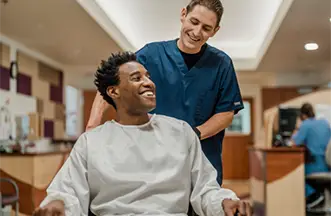
Vocational Nursing Program (LPN/LVN)
Prepare for entry-level nursing training with Carrington College’s Vocational Nursing program. Through classroom learning, lab practice, and clinical experience, you’ll build the knowledge and hands-on skills used to provide basic patient care in a variety of healthcare settings.
Request Information
All fields using an asterik (*) are required.
Request Information
All fields using an asterik (*) are required.

Program Details
What Will I learn
Carrington College’s Vocational Nursing program provides the clinical training and knowledge to deliver safe, patient-centered care in a variety of healthcare settings. Upon completion of the Vocational Nursing Certificate, graduates will be able to:
- Implement the nursing process in providing care for patients in a variety of clinical settings.
- Demonstrate academic preparedness to take the NCLEX-PN exam to become a licensed vocational nurse.
- Demonstrate the ability to apply critical thinking, collaboration, communication, and professionalism.
Upon completion of the Associate Degree in Vocational Nursing, graduates will be able to:
- Use nursing skills, knowledge, and judgment, to establish baseline data for the nursing process.
- Demonstrate competence in diagnostic and therapeutic nursing techniques.
- Use strong, developed self-concept in combination with creative/critical thinking, nursing judgment, knowledge and skills to provide nursing care in all healthcare settings.
- Embody caring and compassion as evidenced by interpersonal interactions and therapeutic practice.
- Use communication skills and collaboration with clients/families, and other members of the health care delivery team.
- Apply organizational skills to focus the care on the client’s needs while working with interdisciplinary teams of allied health workers.
- Use nursing judgment to provide cost-effective client care.
- Use leadership and professionalism to be a client advocate and bring about any needed changes in the healthcare delivery system of today.
- Pass the Licensed Vocational Nurse Board Examination (NCLEX-PN) for licensure.
- Relate and apply concepts of communication, reasoning, critical analysis, ethical behavior and appropriate interpersonal interaction to situations in their career and personal life.
With hands-on training and clinical experience, you will be well-prepared for entry-level employment as a vocational nurse under the guidance of a registered nurse or licensed physician/dentist in a variety of healthcare settings.
Military Policy
Cost & Financial Aid
Your education is an investment in your future, and Carrington College is here to help. We offer a variety of financial aid options, including federal, state, and private programs, as well as student loans, grants, and scholarships are available for those who qualify. Each program has different requirements and application instructions. Our team is here to guide you through the options and application process.
Academic Cost
For complete details on current tuition costs, please refer to the Academic Catalog.
Compare Nursing Programs
Once you have decided you want to pursue a rewarding career in the nursing field, choosing the right job path and career education is the next step.
Location Availability
Carrington College is proud to offer a Vocational Nursing program at multiple locations in California. Vocational Nursing program availability varies by location. To learn more about our locations, explore their pages.
Accreditation & Approvals
Carrington College is accredited by the Accrediting Commission for Community and Junior Colleges, 428 J Street, Suite 400, Sacramento, CA 95814; 415 506 0234 an institutional accrediting body recognized by the Council for Higher Education Accreditation and the U.S. Department of Education. Additional information about accreditation, including the filing of complaints against member institutions, can be found at accjc.org.
For comprehensive information on Carrington College’s accreditation and approvals, visit carrington.edu/accreditation-and-approvals/.
Carrington College’s Sacramento and San Jose Vocational Nursing programs hold approval from the Board of Vocational Nursing and Psychiatric Technicians, 2535 Capitol Oaks Drive, Suite 205, Sacramento, CA 95833,916 263 7800, www.bvnpt.ca.gov. Students may and have the right to contact the Board of Vocational Nursing and Psychiatric Technicians at 916 263 7800.
Course Catalog
Program Specific Disclosures
Licensure Exam Pass Rates
This program in Vocational Nursing prepares graduates for an occupation in which passage of a California licensing examination is required. The link below shows exam passage rates for the most recent available year. If you have questions regarding the calculation of these rates please contact the agency listed.
Board of Vocational Nursing & Psychiatric Technicians https://www.bvnpt.ca.gov/pdf/vn_pass_rates.pdf
Continuing Education For Graduates
Student Outcomes

REAL-WORLD SKILLS
Our hands-on nursing classes help you build the practical skills for your career.

START YOUR PATH
Earn your Vocational Nursing certificate in as few as 12 months or an associate degree in as few as 15. Program availability varies by location.

FLEXIBLE LEARNING OPTIONS
Conveniently available at multiple locations.

AFFORDABLE TUITION
Tuition varies by program and location.
Carrington has taught me that even though healthcare is science, it is also an art. We help patients out not with just medicine but by caring and support. Sometimes the best medicine is to sit, listen, and be there for the patient.
MERCEDES G.
2021 STUDENT, PRACTICAL NURSING

Vocational Nursing Core Competencies
As part of Carrington College’s School of Nursing, the Vocational Nursing program is designed to support you as you build the knowledge, clinical skills, and professional behaviors used in entry-level nursing practice. Through a blend of classroom learning, hands-on lab practice, and supervised clinical experience, you’ll begin developing the competencies used to provide safe and effective patient care. (2)
In this program, you’ll work toward developing skills such as: (2)
- Patient Care & Safety: Supporting patient comfort, safety, and well-being while providing basic nursing care
- Clinical Judgment: Using knowledge and critical thinking to assist with patient care and respond to changing conditions
- Communication & Collaboration: Communicating with patients, families, and members of the healthcare team
- Technical Nursing Skills: Performing clinical tasks such as monitoring vital signs and assisting with treatments under supervision
- Professional & Ethical Practice: Demonstrating accountability, professionalism, and respect in healthcare settings
- Documentation & Information Management: Recording patient information accurately to support continuity of care
These competencies are introduced and practiced through instruction, simulation, and supervised clinical training, helping you begin applying what you learn in real-world healthcare environments. (2)
What Will I Learn?

MEDICAL SURGICAL NURSING

PEDIATRIC NURSING

ANATOMY AND PHYSIOLOGY

CLINICAL PHARMACOLOGY
Vocational Nursing Career Opportunities
Licensed practical and licensed vocational nurse job duties can vary depending on the state in which you are licensed to practice. Typical job duties of an LPN or LVN include: (1)
- Monitoring patients’ health, for example, by checking their blood pressure, body temperature, and other vital signs
- Administering basic patient care, including changing bandages
- Providing for the basic comfort of patients, such as helping them bathe or dress
- Discussing the care they’re providing to patients and listening to their concerns
- Reporting patients’ status and concerns to registered nurses and doctors
- Keeping records of patients’ health
If you’re exploring what a future in nursing could look like, learn more about roles, responsibilities, and settings in our Nursing Career Guide.
Why Choose Carrington College's Vocational Nursing Program
Carrington College’s Vocational Nursing program is designed to support you as you work toward developing the knowledge and clinical skills used in entry-level nursing practice.
Through vocational nursing classes that emphasize direct patient care, you’ll have opportunities to build confidence with hands-on learning in both simulated lab settings and supervised clinical environments.
If you’re exploring how to become a vocational nurse or how to become an LVN nurse, the curriculum is aligned with professional standards and focuses on helping you develop practical nursing skills used in real-world healthcare settings. (2) (3)
Program highlights include:
- Focused, skill-based nursing education centered on direct patient care
- Curriculum aligned with professional standards for entry-level vocational nurses
- Hands-on training through skills labs and supervised clinical experiences
- Instruction that supports the development of clinical judgment and patient care skills
- Opportunities to practice communication and teamwork in healthcare settings

Vocational Nursing
Find Your Path in Vocational Nursing
Talk to an Enrollment Services Associate about training to become a vocational nurse and earn your certificate in as few as 12 months.
Successful Vocational Nursing Grads
Ask one of our graduates about their Carrington College experience and they’ll likely describe it as life-changing.
Discover What It's Like in the Vocational Nursing Program at Carrington
Explore The School of Nursing

Student Life
The passion our students bring to their education is real. At Carrington College, we want to keep that passion going far beyond our learning experience.
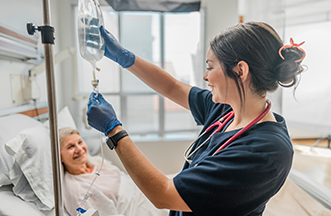
All Nursing Programs
There are many different nursing programs to choose from, so you can select the career path that best suits your personal and professional goals.
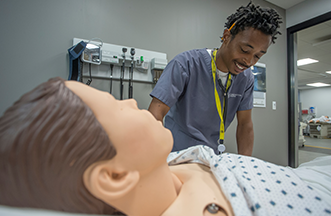
Compare Programs
Once you have decided you want to pursue a rewarding career in the nursing field, choosing the right job path and career education is the next step.
Nursing Resources
Whether you’re just starting out in nursing, or taking your education to the next level, there are plenty of nursing student resources to assist you.

FINANCIAL SERVICES
Figuring out how to pay for your education can be intimidating, but we’re here to help! Student loans, grants, and scholarships are available to those who qualify.
Vocational Nursing Program FAQs
-
Vocational nursing is a level of nursing practice focused on providing basic patient care under the supervision of registered nurses and physicians. Licensed vocational nurses (LVNs) help support patient care by monitoring health, assisting with treatments, and helping maintain patient comfort across a variety of healthcare settings. (1)
Vocational nursing programs are designed to help you begin building the foundational knowledge and clinical skills used in entry-level nursing roles.
-
A licensed vocational nurse (LVN) provides basic patient care under the supervision of a registered nurse or physician. Responsibilities may include monitoring vital signs, assisting with patient care, supporting treatments, and maintaining patient records. (1)
In this role, you may work closely with patients and support communication as part of a healthcare team.
-
Licensed vocational nurses may work in a variety of healthcare settings, depending on their training and state regulations. (1) Common work environments may include hospitals, long-term care facilities, outpatient clinics, and physician offices. (1)
These settings offer opportunities to support patient care as part of a healthcare team.
-
Certified nursing assistants (CNAs) and licensed vocational nurses (LVNs) both support patient care, but they differ in training and responsibilities.
CNAs typically assist with daily living activities such as bathing, feeding, and mobility. LVNs complete additional education and may perform clinical tasks such as monitoring vital signs, assisting with treatments, and administering certain medications (as permitted by state regulations). (1)
LVNs work under the supervision of registered nurses or physicians and generally have a broader scope of responsibilities than CNAs.
-
Vocational nursing and registered nursing differ in education, scope of practice, and responsibilities.
LVNs provide basic patient care under supervision, while registered nurses (RNs) complete additional education and may take on expanded responsibilities such as patient assessment, care planning, and coordination of care. (1) (4)
If you’re considering your next step, comparing nursing programs can help you decide which educational path aligns with your goals.
-
Licensed practical nurses (LPNs) and licensed vocational nurses (LVNs) perform similar roles in patient care. The primary difference is the title, which varies by state. Some states use “LPN,” while others use “LVN.” Responsibilities and scope of practice may also vary based on state regulations. (1)
-
Admission requirements for a vocational nursing LVN program may vary by institution, but common requirements can include:
- Being at least 18 years of age by the expected start date
- Holding a current American Heart Association Basic Life Support (BLS) for the Healthcare Provider card
- Completing the ATI TEAS admission assessment
- Submitting proof of required immunizations
- Completing a background check and drug screening within a required timeframe prior to enrollment
- Meeting transfer credit requirements, including evaluation of prior coursework
You can review full admissions requirements in the Academic Catalog.
-
The Carrington College VN program is designed to help students build the knowledge and clinical skills used in practical nursing. Whether you pursue a certificate or associate degree in vocational nursing, graduates may be eligible to apply for the National Council Licensure Examination for Practical Nurses (NCLEX-PN), depending on state requirements. (1) (5)
Carrington College prepares students to pursue certification and licensure related to their program of study. Carrington does not guarantee that students will pass exams or become licensed.
-
Students in the Vocational Nursing program complete supervised clinical training in healthcare settings. These experiences may take place in environments such as hospitals, long-term care facilities, and outpatient clinics. (1)
During clinical training, you’ll have the opportunity to begin applying what you’ve learned and developing hands-on patient care skills in real-world settings.
References:
- U.S. Bureau of Labor Statistics. “Licensed Practical and Licensed Vocational Nurses.”
https://www.bls.gov/ooh/healthcare/licensed-practical-and-licensed-vocational-nurses.htm - Carrington College. “Nursing Student Handbook (Volume IV).”
https://docs.carrington.edu/handbooks/Nursing-Handbook-IV.pdf - Carrington College. “Academic Catalog, Volume XII (2026).”
https://docs.carrington.edu/catalog/Carrington-College-Catalog-Volume-XII-2026.pdf - U.S. Bureau of Labor Statistics. “Registered Nurses.”
https://www.bls.gov/ooh/healthcare/registered-nurses.htm - National Council of State Boards of Nursing (NCSBN). “NCLEX-PN Examination.”
https://www.ncsbn.org