Practical Nursing Program
Begin your next chapter in healthcare with Carrington College’s Practical Nursing program, where you can build skills through hands-on training for entry-level nursing roles.
Request Information
All fields using an asterik (*) are required.
Request Information
All fields using an asterik (*) are required.
Program Details
What Will I learn
Carrington College’s Practical Nursing program provides the clinical skills and foundational knowledge to care for patients in nursing and residential care facilities, physicians offices, hospitals, and home health settings. Upon completion of the Practical Nursing program, graduates will be able to:
- Implement a plan of care that provides safe, quality patient centered care to persons throughout the lifespan and across the health/wellness continuum that creates an environment promoting caring and professionalism with consideration for the patient’s cultural/societal beliefs and practices.
- Apply knowledge to concepts in the care of patients throughout the lifespan and across the health/wellness continuum.
- Demonstrate effective communication and behaviors with healthcare stakeholders that is consistent with the practical nursing scope of practice and adhering to legal and ethical frameworks.
With a fast-track path to a career in nursing and a strong foundation for continued learning, this program helps prepare you to make a meaningful impact in patient care.
Military Policy
Cost & Financial Aid
Your education is an investment in your future, and Carrington College is here to help. We offer a variety of financial aid options, including federal, state, and private programs, as well as student loans, grants, and scholarships are available for those who qualify. Each program has different requirements and application instructions. Our team is here to guide you through the options and application process.
Academic Cost
For complete details on current tuition costs, please refer to the Academic Catalog.
Compare programs
Once you have decided you want to pursue a rewarding career in the nursing field, choosing the right job path and career education is the next step.
Location Availability
Carrington College is proud to offer our Practical Nursing program at multiple locations around the Western U.S. To learn more about our locations, explore their pages.
Accreditation & Approvals
Carrington College is accredited by the Accrediting Commission for Community and Junior Colleges, 428 J Street, Suite 400, Sacramento, CA 95814; 415 506 0234 an institutional accrediting body recognized by the Council for Higher Education Accreditation and the U.S. Department of Education. Additional information about accreditation, including the filing of complaints against member institutions, can be found at accjc.org.
For comprehensive information on Carrington College’s accreditation and approvals, visit carrington.edu/accreditation-and-approvals/.
The Practical Nursing program at Carrington College at the campus located in Boise, Idaho is accredited by the: Accreditation Commission for Education in Nursing (ACEN), 3390 Peachtree Road NE, Suite 1400, Atlanta, Georgia 30326, 404-975-5000.
The most recent accreditation decision made by the ACEN Board of Commissioners for the Practical Nursing program is Continuing Accreditation.
View the public information disclosed by the ACEN regarding this program at www.acenursing.org/search-programs/.
Effective September 5, 2024: The Practical Nursing program at Carrington College at the campus located in Albuquerque, New Mexico is a candidate for initial accreditation by the: Accreditation Commission for Education in Nursing (ACEN). The candidacy status expires on September 5, 2026. Accreditation Commission for Education in Nursing (ACEN), 3390 Peachtree Road NE, Suite 1400, Atlanta, Georgia 30326, 404 975 5000.
View the public information disclosed by the ACEN regarding this program at www.acenursing.org/search-programs/.
Carrington College holds full approval for its Practical Nursing program and its associate degree professional nursing education program. The Idaho Board of Nursing issued a certificate of approval. Board offices are located at the Division of Occupational & Professional License (DOPL), 11341 West Chinden Blvd., Boise, ID 83714. Their mailing address is DOPL, P.O. Box 83720, Boise, ID 83720-0063. The Idaho Board of Nursing’s website is www.dopl.idaho.gov/bon/. Questions may be directed to HP-Licensing@dopl.idaho.gov or 208 577 2476.
The New Mexico Board of Nursing certifies that Carrington College is granted full approval with warning to offer Practical Nursing in the State of New Mexico, 6301 Indian School NE, Suite 710, Albuquerque, NM, 87110; mailing address PO Box 3628, Albuquerque, NM 87190, 505 841 8340, https:/bon.nm.gov/.
Course Catalog
Program Specific Disclosures
Licensure Exam Pass Rates
The Accreditation Commission for Education in Nursing (ACEN) requires that the following student achievement outcome data be made publicly available.
- Graduates’ success on the licensure and/or certification examination
- Students’ completion of the nursing program
- Graduates obtaining a job
To view this information for Carrington College’s ACEN – accredited nursing programs:
Continuing Education For Graduates
Student Outcomes

REAL WORLD SKILLS
With many classes to guide you, you’re certain to be prepared for your career.

START YOUR PATH
Earn a Practical Nursing certificate in as few as 12 months.

FLEXIBLE LEARNING OPTIONS
Conveniently available at several of our campuses.

AFFORDABLE TUITION
Affordable tuition varies by program and location.
Carrington has taught me that even though healthcare is science, it is also an art. We help patients out not with just medicine but by caring and support. Sometimes the best medicine is to sit, listen, and be there for the patient.
MERCEDES G.
2021 STUDENT, PRACTICAL NURSING
Practical Nursing Program Core Skills and Competencies
As part of Carrington College’s School of Nursing, the Practical Nursing program is designed to help students build the knowledge and hands-on skills commonly used in entry-level nursing roles. Through a combination of classroom instruction, lab practice, and clinical experience, students work toward developing core competencies that support patient care across a variety of healthcare settings.
- Patient Care and Clinical Skills: Students are introduced to the fundamentals of patient care, including supporting individuals with daily activities, monitoring health status, and assisting with common procedures. These skills are applied across different stages of life and healthcare needs. (2)
- Communication and Professional Practice: Practical nursing also emphasizes clear communication with patients, families, and healthcare teams. Students work toward developing professional behaviors that align with the practical nursing scope of practice. (2)
- Safety and Quality Care: A focus on safe, patient-centered care is integrated throughout the program. Students learn to contribute to care plans and support a healthcare environment that prioritizes patient well-being. (2)
- Foundational Knowledge for Continued Learning: The program provides a foundation in nursing concepts that may support continued education. Students are introduced to concepts used throughout the healthcare continuum, helping them build confidence in both clinical settings and future learning opportunities. (2) (3)
What Will I learn?

Medical Surgical Nursing

Mental Health Nursing

Pediatric Nursing

Anatomy and Physiology
What You Can Do With a Practical Nursing Credential
The field of practical nursing offers a hands-on role in healthcare focused on day-to-day patient care. While registered nurses often focus on coordinating care, a practical nursing credential can prepare you to support patients directly at the bedside.
Licensed practical nurses (LPNs) play an important role in helping patients feel comfortable, supported, and cared for in a variety of healthcare settings. (1) For many students, practical nursing can serve as a pathway to LPN roles in a range of healthcare environments, including: (1)
- Nursing and Residential Care Facilities: This is one of the most common work environments for practical nurses. In these settings, LPNs help manage daily care, monitor patient conditions, and support residents with activities like mobility and medication routines.
- Home Healthcare Services: Some practical nurses work one-on-one with patients in their homes. This can include providing basic care, supporting recovery, and keeping care teams informed of a patient’s progress.
- Physicians’ Offices: In outpatient settings, LPNs may assist with procedures, help prepare patients for exams, and perform basic clinical tasks.
- Hospitals: In hospital environments, practical nurses support care teams by assisting with patient care, maintaining clean and safe treatment areas, and helping with routine clinical procedures.
Visit our Nursing Career Guide to explore additional paths and see how different nursing roles work together.
Real-World Patient Care Practice
Hands-on experience is an important part of learning practical nursing skills. In Carrington College’s Practical Nursing program, students participate in supervised clinical rotations in healthcare settings, where they can apply what they’ve learned in real-world environments based on clinical placement availability. (3)
During clinical experiences, students work toward building core competencies such as patient care, measuring vital signs, documentation, and professional communication with patients and care teams. These skills are foundational for those who may choose to continue their education, including pathways like the Nursing Bridge program. (2) (3)
In addition to clinical rotations, simulation and lab-based training provide opportunities to practice skills in a structured environment. These experiences are designed to reinforce safe, evidence-based techniques and support continued hands-on learning. (1) (2)
Practical Nursing
Find your path in Practical Nursing
Talk to an enrollment services represenative about earning your Practical Nursing certificate in as few as 12 months.
Successful Nursing Program Grads
Ask one of our graduates about their Carrington College experience and they’ll likely describe it as life-changing.
Discover What It’s Like to Train to Become a Nurse at Carrington College
Explore The School of Nursing

Student Life
The passion our students bring to their education is real. At Carrington College, we want to keep that passion going far beyond our learning experience.
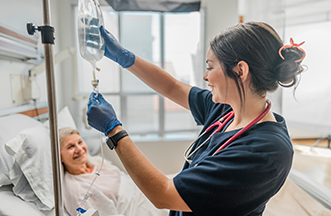
All Nursing Programs
There are many different nursing programs to choose from, so you can select the career path that best suits your personal and professional goals.
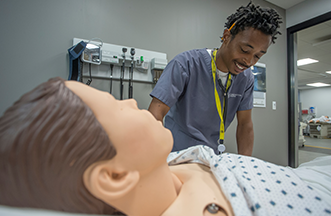
Compare Programs
Once you have decided you want to pursue a rewarding career in the nursing field, choosing the right job path and career education is the next step.
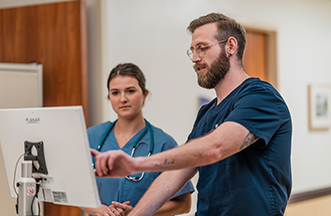
Nursing Resources
Whether you’re just starting out in nursing, or taking your education to the next level, there are plenty of nursing student resources to assist you.
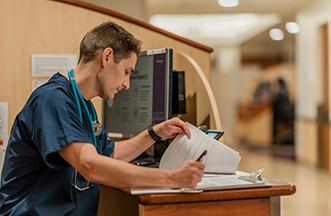
FINANCIAL SERVICES
Figuring out how to pay for your education can be intimidating, but we’re here to help! Student loans, grants, and scholarships are available to those who qualify.
Practical Nursing Program FAQs
-
Practical nursing focuses on providing basic patient care under the supervision of registered nurses and physicians. Licensed practical nurses (LPNs), also known as licensed vocational nurses (LVNs) in some states, support patients by monitoring health, assisting with daily activities, and helping care teams deliver consistent, quality care. (1) (2)
Graduates of LVN/LPN programs may be eligible to apply for licensure and take the NCLEX-PN exam. Carrington College prepares students to take appropriate certification and licensure exams related to their individual majors. The College does not guarantee students will successfully pass these exams or be certified or licensed as a result of completing the program. (2)
-
A common pathway to LPN involves completing an approved practical nursing program and meeting state licensure requirements. (3)
Carrington College’s Practical Nursing program is designed to help students build foundational knowledge and hands-on skills commonly used in practical nursing roles. Program length may vary, but some students may complete training in as few as 12 months. (2)
Graduates may be eligible to apply for licensure and take the National Council Licensure Examination for Practical Nurses (NCLEX-PN).* Licensure requirements vary by state. (3)
-
Licensed practical nurses (LPNs) and registered nurses (RNs) both provide patient care, but their responsibilities differ. LPNs typically focus on basic patient care, such as monitoring vital signs and assisting with daily activities, under supervision. RNs often have a broader scope of practice, which may include coordinating care, administering treatments, and supervising other staff. (1).
-
In most cases, there is no major difference between an LPN and an LVN. The titles refer to the same role; the primary distinction is the title used in different states. LPN (licensed practical nurse) is used in most states, while LVN (licensed vocational nurse) is used in states such as California and Texas. (1)
-
Admission requirements for licensed practical nurse programs may vary by institution, but applicants are often expected to meet several baseline criteria. These may include being at least 18 years old, passing the ATI TEAS admission assessment with a minimum composite score, and completing a background check and drug screening within a specified timeframe. Some programs may also require a current American Heart Association Basic Life Support (BLS) for Healthcare Providers certification. (2)
For more details about the enrollment process, visit our Admissions page.
-
Practical nursing focuses on providing basic patient care under the supervision of registered nurses or physicians. Registered nursing typically involves a broader scope of practice, including coordinating care and performing more complex clinical tasks. Education pathways and responsibilities differ, and job duties may vary by state regulations and employer needs.
Many nurses begin their careers in LVN or LPN programs and later continue their education through nursing bridge programs to become a registered nurse. Compare Carrington’s nursing programs to see which may be the right fit for you.
-
Carrington College’s Practical Nursing program is designed to help students build the knowledge and skills commonly assessed on the NCLEX-PN exam. Graduates may be eligible to apply for licensure and take the exam, depending on state requirements. Carrington College prepares students to take appropriate certification and licensure exams related to their individual majors but does not guarantee exam success or licensure.
-
Students participate in supervised clinical experiences in healthcare settings based on clinical placement availability. These environments may include hospitals, long-term care facilities, and other clinical sites. Clinical experiences are designed to help students apply classroom learning in real-world patient care settings.
*Carrington College prepares students to take appropriate certification and licensure exams related to their individual majors. The College does not guarantee students will successfully pass these exams or be certified or licensed as a result of completing the program.
References:
- U.S. Bureau of Labor Statistics. “Licensed Practical and Licensed Vocational Nurses.”
https://www.bls.gov/ooh/healthcare/licensed-practical-and-licensed-vocational-nurses.htm - Carrington College. “Nursing Handbook Volume IV.”
https://docs.carrington.edu/handbooks/Nursing-Handbook-IV.pdf - Carrington College. “Academic Catalog, Volume XII (2026).”https://docs.carrington.edu/catalog/Carrington-College-Catalog-Volume-XII-2026.pdf