Dental assisting is a highly rewarding field that lets you make a positive impact on patients and dental professionals alike. This job is not easy work, however. Dental assistants are the ultimate jacks-of-all-trades.
Dental assistants develop their skills by enrolling in quality dental assisting schools, which provide challenging coursework and plenty of hands-on practice. After completing coursework, dental assistants continue to hone their skills in real-world environments.
Clinical and Technical Skills for Dental Assistants
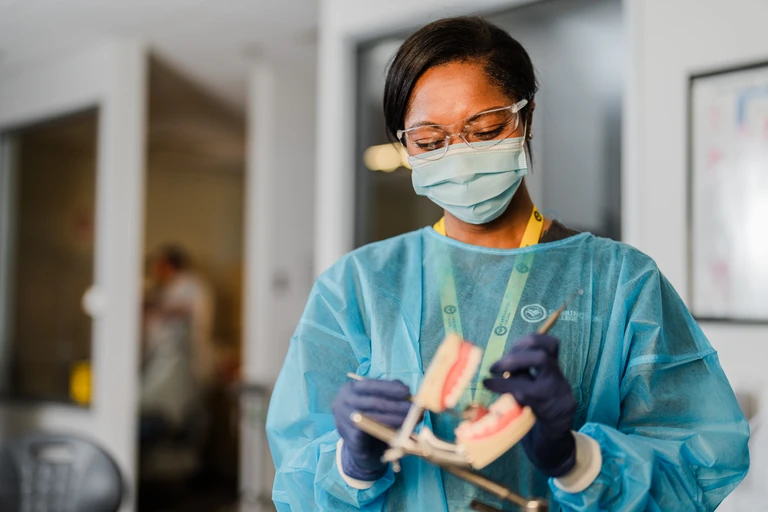
Finding success as a dental assistant begins with developing a wide range of clinical and technical skills while enrolled in dental assistant programs, including:
Dental Terminology
A thorough understanding of dental terminology is vital to success as a dental assistant. As the American Dental Association (ADA) points out, key terms are used “in the course of delivering care to patients.” (1) This encompasses a broad range of concepts, such as:
- Dental anatomy. Dental assistants must be able to identify specific tooth types and the dental notation systems that assign numbers to each tooth. Dental assistants should also know the parts of the teeth: enamel, dentin, cementum, and pulp.
- Dental concerns. From caries to bruxism and gingivitis, dental assistants should thoroughly understand the many oral concerns and conditions their patients face.
- Processes and procedures. The far-reaching vocabulary of a typical dental assistant includes both clinical and administrative terminology. This prepares dental assistants to handle everything from insurance paperwork to processing labs and X-rays.
Terminology is typically covered early in coursework and provides a foundation for developing other dental assisting skills.
Instrument Identification and Sterilization
Understanding which instruments are needed for various procedures and how they’re used is another important skill dental assistants must develop. During procedures, dentists or dental hygienists often rely on assistants to hand them the right tools. The dental assistant must ensure dentists and hygienists always have the right tool for the job. Clinical duties can also include preparing equipment and materials, setting up instrument trays and sterilizing instruments.
Dental Radiography
Many dental assistants perform radiology services, assuming they are properly trained and supervised. Depending on the scope of the practice, dental assistants may handle diagnostic, panoramic, or cone-beam computed tomography (CBCT) imaging. The images provide valuable insight into patients’ oral health while also helping dentists make difficult decisions about treatment protocol.
Dental Assisting programs provide students with hands-on radiology training, including how to establish proper health and safety practices when working with radiologic equipment.
Infection Control and Safety Practices
Dental assistants must understand infection control and safety practices to help maintain a safe clinical environment. Relevant dental assisting skills include: (2)
- Hand hygiene: Dental assistants must wash their hands according to established safety practices, know when to use alcohol-based hand rubs, and keep nails short to reduce the risk of trapped bacteria.
- Personal Protective Equipment (PPE): Dental assistants must understand how to properly wear and remove PPE, including clinic jackets, gowns, face masks, protective eyewear, face shields, and gloves.
- Instrument sterilization and disinfection: As noted above, dental assisting skills include properly cleaning and disinfecting instruments and clinical surfaces.
- Safety and compliance: Dental assistants learn to follow OSHA and CDC standards, including the safe handling and disposal of sharps and hazardous waste. Dental assisting programs teach how to maintain safety records and exposure control plans as required by regulations.
Infection control is considered a core competency for dental assistants. As such, expect infection control to be emphasized throughout your dental assisting coursework.
Chairside Assisting
As we’ve already discussed, dental assistant duties include handing dentists the required tools and overseeing imaging, instrument sterilization, and a variety of other tasks. Their contributions help hardworking dentists stay focused, since they can’t manage every moving part of the clinic on their own. Taken together, these skills make up the bulk of chairside assisting. (3)
Communicating With Patients and the Dental Team
Dental assistants often act as an important liaison between staff members and patients. By establishing a strong rapport, they help patients open up about concerns they might otherwise struggle to discuss. In their interactions with dentists and hygienists, assistants provide powerful support and insight. Yes, they follow instructions, but self-starters are valued when they can get the job done without micromanaging.
Important “soft” skills dental assistants should develop include:
- Empathy and compassion: Patients want to know their dental providers care about them as people—not just as teeth to be examined. A compassionate approach makes worried or distressed patients feel more comfortable and more willing to continue seeking long-term oral care.
- Active listening: In a busy dental environment, it’s easy to get sidetracked or barely acknowledge what patients are saying. Active listening ensures patients feel acknowledged and respected, and can provide valuable insight into the symptoms or lifestyle habits behind oral health concerns. The Dental Assisting National Board (DANB) highlights solid listening skills as a top skill. (4)
- Teamwork and collaboration: Dental assistants instruct patients on proper oral care, but they don’t lecture. Instead, they work with patients to help them understand and take an active role in their oral health. This means tailoring solutions to each patient’s unique needs and preferences, which are easier to discern when you show empathy and actively listen to patient concerns.
Administrative Skills for Dental Assistants
Dental assistants often complete a variety of administrative duties in addition to assisting dentists and dental hygienists. Administrative responsibilities may include:
- Office organization: An organized office is safer, more efficient, and more pleasant for patients. Dental assistants keep the clinic organized so that supplies and records are both accessible and secure.
- Managing appointment schedules: Dental assistants may set and adjust patient schedules, facilitate regular checkups, and make appointments for specific treatments or procedures, such as fillings or crowns. Dental assistants keep these schedules current, canceling or rescheduling appointments as needed.
- Patient records management: Detailed patient records help dentists determine the role oral history plays in current concerns. Assistants document visits and procedures so this information is readily available and easy to understand if needed in the future.
- Billing and insurance processing: Dental assistants may collect payments and handle insurance reimbursements. These can be complicated procedures that call for exceptional organization and attention to detail.
Critical Thinking and Problem-Solving Skills
Dental assistants need to anticipate the needs of patients and staff. It takes excellent communication and critical thinking skills to master this. Assistants must be prepared to:
- Address patient concerns: While some patient concerns can only be resolved through targeted dental treatments, others can be addressed, to some extent, by dental assistants. For example, dental assistants play a vital role in teaching patients about proper oral health practices.
- Respond to emergencies: It is not the dental assistant’s job to provide emergency treatment, but by recognizing the signs and symptoms of urgent conditions, dental assistants can help patients receive prompt care.
- Pay attention to details: A detail-oriented approach is valued in every aspect of dental assisting. This is especially evident in patient care, as it helps dental assistants identify patients’ physical and emotional needs.
How Dental Assisting Programs Help You Develop These Skills
Dental assisting skills can be obtained through formal training, ensuring assistants have the practical and theoretical knowledge necessary for their careers. Typically, programs offer learning through a combination of classroom instruction, hands-on practice labs, and real-world clinical experience.
Start Your Dental Assisting Training at Carrington College
If you exemplify the qualities highlighted above, you could be an amazing candidate for a career in dental assisting. Get started with a highly respected Dental Assisting program. Carrington College offers an excellent Dental Assisting program that prepares you to enter the field with critical skills and knowledge. Reach out today for more information.
References
- American Dental Association. “Glossary of Dental Terms.” American Dental Association, https://www.ada.org/publications/cdt/glossary-dental-terms. Accessed 22 Sept. 2026. a
- Centers for Disease Control and Prevention. “Guidelines for Infection Control in Dental Health-Care Settings—2003.” Morbidity and Mortality Weekly Report, vol. 52, no. RR-17, 2003, pp. 1–76, https://www.cdc.gov/mmwr/pdf/rr/rr5217.pdf. Accessed 22 Sept. 2026. a
- U.S. Bureau of Labor Statistics. “Dental Assistants.” Occupational Outlook Handbook, U.S. Department of Labor, 27 Aug. 2026, https://www.bls.gov/ooh/healthcare/dental-assistants.htm. Accessed 22 Sept. 2026. a
- Albino, Alnardo “Tito.” “Recognizing the Magic of Dental Assistants.” Dental Assisting National Board, 28 Feb. 2025, https://www.danb.org/news-blog/detail/certified-press/recognizing-the-magic-of-dental-assistants. Accessed 22 Sept. 2026. a