Working in healthcare can be emotionally and physically challenging, but also incredibly rewarding and satisfying. Medical assisting is no different than other healthcare careers in this regard. Before you decide it may be too hard of a career for you, learn more about the challenges and opportunities of a medical assisting career.
What to Expect During Medical Assistant Training
Preparation is key for a career in medical assisting. A hands-on medical assisting program helps you build your skills in a safe, supportive learning environment. Medical assisting programs focus on:
- Learning medical terminology, anatomy basics, and clinical vocabulary
- Building confidence with hands-on clinical procedures like taking vitals, giving injections, and drawing blood
- Skills intended for a fast-paced, professional healthcare environment
- Applying classroom knowledge during clinical externship experiences
Medical Assistant Work-Life Balance
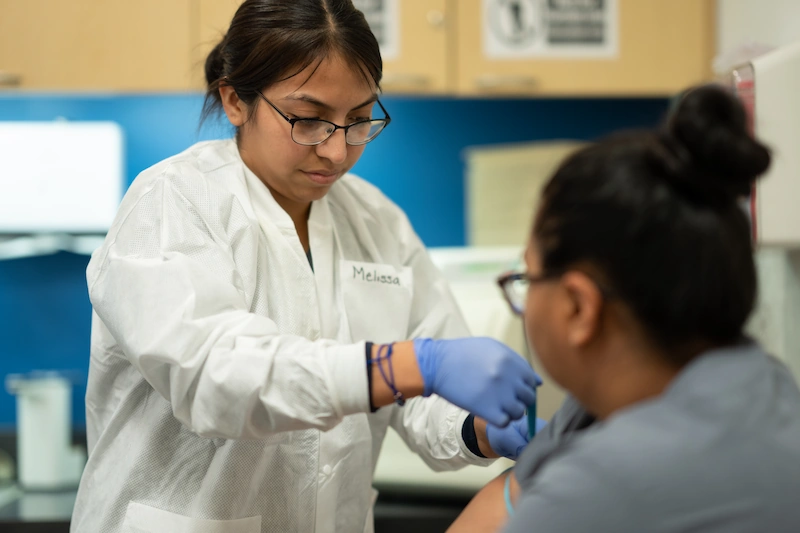
For some, the idea that being a medical assistant is “hard” comes from how the general public perceives health care jobs. Nurses, doctors, and other professional health care providers often work very long hours and can have unpredictable schedules. Fortunately, working as a medical assistant often offers more predictable work schedules, helping you maintain your work-life balance.
According to the Bureau of Labor Statistics, in 2025, about 56 percent of medical assistants work in a doctor’s office, which means many medical assistants in the U.S. work a typical 9-to-5 schedule. (1) Of course, some medical assistants work nights, evenings, and weekends, depending on their work setting, which may offer a range of scheduling options.
Common Challenges Medical Assistants Face on the Job
As for the job itself, we would be lying if we said medical assisting wasn’t sometimes challenging—but challenging jobs can be rewarding, allowing you opportunities to think on your feet and overcome new obstacles each day. The medical assistant workday also includes plenty of structure and routine, so you’ll likely enjoy quiet, predictable work as well.
Outside of day-to-day responsibilities, the most challenging aspects of being a medical assistant are unexpected clinical and administrative “emergencies” that can arise during a shift. Remember, these situations can seem more stressful to the untrained eye than they actually are.
After finishing a medical assistant training program, you’ll have the skills to handle challenges such as:
- Difficult Patients: Medical assistants interact with patients every day, and not all of the interactions are pleasant. Patients can experience a wide range of negative emotions, including anger, frustration, anxiety, and fear. As the first and sometimes last person a patient sees in the doctor’s office, medical assistants sometimes bear the brunt of a patient’s emotions. Even in these unpleasant situations, medical assistants must stay professional and patient. If you’re not a people person, this could be one of the harder parts of the job.
- Medical Emergencies: Medical emergencies such as asthma attacks, anaphylaxis, seizures, and cardiac arrest can occur in clinical settings. These situations can be scary, but as a medical assistant, you’ll have earned CPR and First Aid Certification as part of your medical assisting program, so you’ll have the training and confidence to assist if a medical emergency presents itself.
- Emotional Closeness: Medical assistants often build very close relationships with regular patients. Because of this, it can be hard on medical assistants when a patient receives upsetting news or passes away. However, medical assistants also have responsibilities to other patients; they need to stay professional and composed during the workday.
The bottom line: Medical assisting can be a challenging career. Can it be stressful? Sure. But is it so hard that you should pursue another line of work? Absolutely not.
Tips for Managing Stress as a Medical Assistant
Challenges can be trying for even the most prepared medical assistant. Here are some quick tips to help you manage stress after you graduate:
- Take Care of Yourself: Get plenty of rest, eat a healthy diet, and dress comfortably.
- Arrive Early: Showing up early gives you extra time to organize and prepare for the day (and leaves a good impression on your employer).
- Work Smarter: Stay organized, plan your work, don’t procrastinate, and most importantly, ask for help when you need it.
- Embrace Challenges: Demonstrate a positive, can-do attitude when challenges arise, and see every challenge as an opportunity for growth.
Keep these tips in mind as you work towards your medical assisting certificate. Developing these habits early prepares you for the pace of clinical work.
If you’re ready to start preparing for a rewarding career in healthcare, the Medical Assisting program at Carrington College may be right for you. You can earn a Certificate of Completion in as few as 9 months.
How Does Medical Assisting Compare to Other Healthcare Training Paths?
| Medical Assistant (1) | Dental Assistant (2) | Pharmacy Technician (3) | |
|---|---|---|---|
| Daily Duties |
|
|
|
| Work Settings |
|
|
|
| Typical Training Path |
|
|
|
Start Your Medical Assistant Training at Carrington College
Carrington College’s hands-on Medical Assisting program combines classroom instruction with hands-on clinical and administrative lab practice. The program includes valuable externships that give students opportunities to practice newly learned skills in real-world environments. Request more information today, or view our Medical Programs for more educational opportunities.
References
- U.S. Bureau of Labor Statistics. (2026, August 27). Medical assistants. U.S. Department of Labor. https://www.bls.gov/ooh/healthcare/medical-assistants.htm. Accessed 28 September, 2026. ^ a b
- U.S. Bureau of Labor Statistics. (2026, August 27). Dental assistants. U.S. Department of Labor. https://www.bls.gov/ooh/healthcare/dental-assistants.htm. Accessed 28 September, 2026. ^ a
- U.S. Bureau of Labor Statistics. (2026, August 27). Pharmacy technicians. U.S. Department of Labor. https://www.bls.gov/ooh/healthcare/pharmacy-technicians.htm. Accessed 28 September, 2026. ^ a