Respiratory Therapy Program (Associate of Science)
Carrington College’s Respiratory Therapy program helps students develop the skills to assess, treat, and monitor patients with cardiopulmonary conditions through classroom learning, lab training, and clinical experience.

Request Information
All fields using an asterik (*) are required.
Request Information
All fields using an asterik (*) are required.
Healthcare Open House
Join us for an exciting day at Carrington College’s Open House!
October 21st, 2026, 4:00pm – 7:00pm
Program Details
What Will I learn
The first step toward becoming a respiratory therapist is completing a respiratory therapy education program. In Carrington College’s Associate of Science degree in Respiratory Therapy program, you’ll build a strong foundation in both the knowledge and hands-on skills used in respiratory care settings. (1)
Your coursework may include topics such as:
- Anatomy and physiology of cardiac and respiratory systems
- Pathophysiology of cardiopulmonary diseases
- Mechanical ventilation and airway management
- Assessment techniques
- Pharmacology related to respiratory care
- Patient assessment and monitoring
- Emergency respiratory care and resuscitation techniques
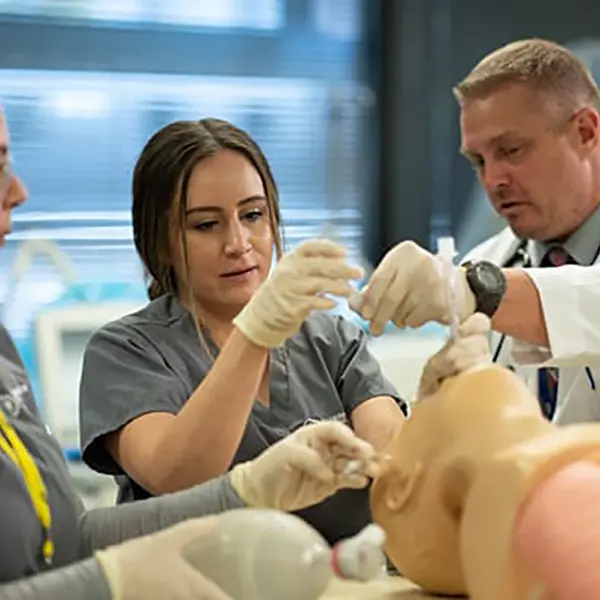
Along the way, you’ll practice skills like patient evaluation, treatment planning, and working with respiratory equipment. You’ll also gain hands-on experience through lab simulations and supervised clinical training, where you can apply what you’ve learned in real healthcare environments. (1)
This structured program is designed to help you build confidence, strengthen clinical judgment, and prepare for respiratory therapy credentialing exams. (1)
Carrington College prepares students to take appropriate certification and licensure exams related to their individual majors. The College does not guarantee students will successfully pass these exams or be certified or licensed as a result of completing the program.
Military Policy
Cost & Financial Aid
Your education is an investment in your future, and Carrington College is here to help. We offer a variety of financial aid options, including federal, state, and private programs, as well as student loans, grants, and scholarships are available for those who qualify. Each program has different requirements and application instructions. Our team is here to guide you through the options and application process.
Academic Cost
For complete details on current tuition costs, please refer to the Academic Catalog.
Location Availability
Carrington College offers the Respiratory Therapy program at select campus locations. These respiratory therapy programs in California and other states allow students to complete classroom learning and clinical training close to home. (1)
Program availability currently includes campuses in:
Location availability may change, so prospective students should confirm program availability with an admissions representative.
Length of Program
At Carrington College, the Associate of Science in Respiratory Therapy program can be completed in as few as 75 weeks.
Accreditation & Approvals
Program Goals
The Carrington College Respiratory Therapy program goal is to prepare graduates with demonstrated competence in the cognitive (knowledge), psychomotor (skills), and affective (behavior) learning domains of respiratory care practice as performed by registered respiratory therapists (RRTs).
Program Accreditation
The Respiratory Therapy Associate of Science degree program at Bakersfield (#200425), Las Vegas (#200536), Ontario (#200495), Phoenix (#200390), Pleasant Hill (#200542) Rancho Cordova (#200518), Temecula (#200607), and Visalia (#200389) campuses are accredited by the Commission on Accreditation for Respiratory Care (coarc.com).
Outcomes Data
The CoARC accredits Respiratory Therapy education programs in the United States. To achieve this end, it utilizes an ‘outcomes-based’ process. Programmatic outcomes are performance indicators that reflect the extent to which the educational goals of the program are achieved and by which program effectiveness is documented.
To view outcomes data, please visit coarc.com/students/programmatic-outcomes-data.
Carrington College is accredited by the Accrediting Commission for Community and Junior Colleges, 428 J Street, Suite 400, Sacramento, CA 95814; 415 506 0234 an institutional accrediting body recognized by the Council for Higher Education Accreditation and the U.S. Department of Education. Additional information about accreditation, including the filing of complaints against member institutions, can be found at accjc.org.
For comprehensive information on Carrington College’s accreditation and approvals, visit carrington.edu/accreditation-and-approvals/.
Course Catalog
Program Specific Disclosures
Continuing Education For Graduates
Student Outcomes

REAL-WORLD SKILLS

START YOUR PATH

FLEXIBLE LEARNING OPTIONS

AFFORDABLE TUITION
The support system in this program was phenomenal…studying something so completely new to me was a shock, but the instructors made it understandable and achievable. I fell in love with it.
What Will I Learn?

Anatomy and Physiology

Fundamentals of Respiratory Therapy

Ventilatory Principles of Respiratory Therapy

Clinical Practice
CAREER OPPORTUNITIES FOR RESPIRATORY THERAPISTS
Respiratory therapists provide care for patients with breathing and cardiopulmonary conditions, including asthma, chronic obstructive pulmonary disease (COPD), and other lung disorders. (2) Graduates of respiratory therapy programs may pursue entry-level roles in healthcare settings where respiratory care is part of patient treatment and recovery.
As you move forward in your career, you may find opportunities in a range of healthcare environments, such as: (2)
- Hospitals and acute care facilities
- Emergency departments and intensive care units (ICU)
- Outpatient clinics and physician offices
- Skilled nursing and long-term care facilities
Skills and responsibilities respiratory therapy students may develop include: (2) (4)
Patient Evaluation
- Assessing breathing patterns and oxygen levels
- Reviewing medical histories related to respiratory conditions
Treatment Administration
- Delivering oxygen therapy and respiratory medications
- Assisting with ventilators and airway management
Diagnostic Procedures
- Supporting diagnostic respiratory procedures
- Monitoring patient responses during treatment
Patient Support and Communication
- Teaching patients how to use breathing devices
- Explaining respiratory care plans
These responsibilities highlight the clinical role respiratory therapists play in patient care.
Respiratory Therapy Program FAQs
-
Respiratory Therapists work with patients who are struggling with breathing, including those with chronic respiratory disease, such as asthma or emphysema. They may work with all age groups, with whom they will measure breathing capacity and work to administer treatment. (2)
Learn more in our Respiratory Therapist Career Guide.
-
Most professionals begin by completing an associate degree in respiratory therapy, which typically takes about two years. Carrington College’s Respiratory Therapy program can be completed in as few as 18 months. (1) After graduation, candidates are expected to pass credentialing examinations before practicing in many states. (3)
-
Entry-level professionals typically complete an associate degree in respiratory therapy from an accredited program to meet the educational requirements for respiratory therapist roles. (2) These programs include classroom instruction, lab practice, and supervised clinical experience. Some professionals may choose to pursue a bachelor’s degree to expand their education. (2)
-
Respiratory therapists assess, treat, and care for patients with breathing or cardiopulmonary conditions, using a combination of diagnostic testing, therapeutic procedures, and specialized equipment. (2) Because of this, respiratory therapy education programs are designed to build both clinical knowledge and hands-on technical skills used in patient care.
In Carrington College’s Associate of Science in Respiratory Therapy program, students develop these skills through coursework and applied training that may include topics such as: (1)
- Anatomy and physiology
- Fundamentals of respiratory care
- Pharmacology
- Ventilatory principles of respiratory care
- Clinical practice
- Neonatal and pediatric respiratory care
For more information, review the program course catalog.
-
Carrington College’s Respiratory Therapy program is designed to meet educational standards recommended for respiratory therapy training. (1) Accreditation status and credentialing eligibility may vary by campus location, and students should review the program disclosures and accreditation information provided by the college.
-
Yes. The Carrington College Respiratory Therapy program includes supervised clinical training in healthcare facilities. These clinical rotations allow students to practice respiratory care procedures, work with medical equipment, and gain real-world patient care experience under professional supervision. (1)
-
Graduates of accredited respiratory therapy programs may pursue credentialing examinations administered by the National Board for Respiratory Care (NBRC). These exams are commonly used as part of the process for respiratory therapist licensure in many states. (3)
-
During the program, students may complete training related to industry-recognized healthcare certifications depending on campus offerings. These may include certifications in areas such as basic life support or other clinical training commonly used in healthcare settings. (1)
-
After completing an associate degree in respiratory therapy, graduates may pursue entry-level respiratory therapy positions in healthcare settings. (2) With additional education, experience, or specialization, professionals may pursue advanced roles in respiratory care, education, or healthcare leadership. (4)
-
Yes. Graduates of the Associate of Science in Respiratory Therapy program may be eligible to continue their education through Carrington’s Bachelor of Science in Respiratory Therapy completion program. This pathway allows working respiratory therapists to build on their education and expand their professional knowledge. (1)
Sources:
- Carrington College. “Academic Catalog.” https://carrington.edu/admissions/catalog/
- U.S. Bureau of Labor Statistics (BLS). “Respiratory Therapists: Occupational Outlook Handbook.” https://www.bls.gov/ooh/healthcare/respiratory-therapists.htm
- National Board for Respiratory Care (NBRC). “Certified Respiratory Therapist (CRT) & RRT Requirements.” https://www.nbrc.org/examinations/crt/
- O*NET OnLine. “Summary Report for Respiratory Therapists.” https://www.onetonline.org/link/summary/29-1126.00