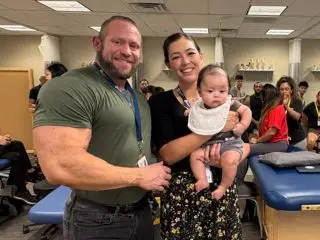
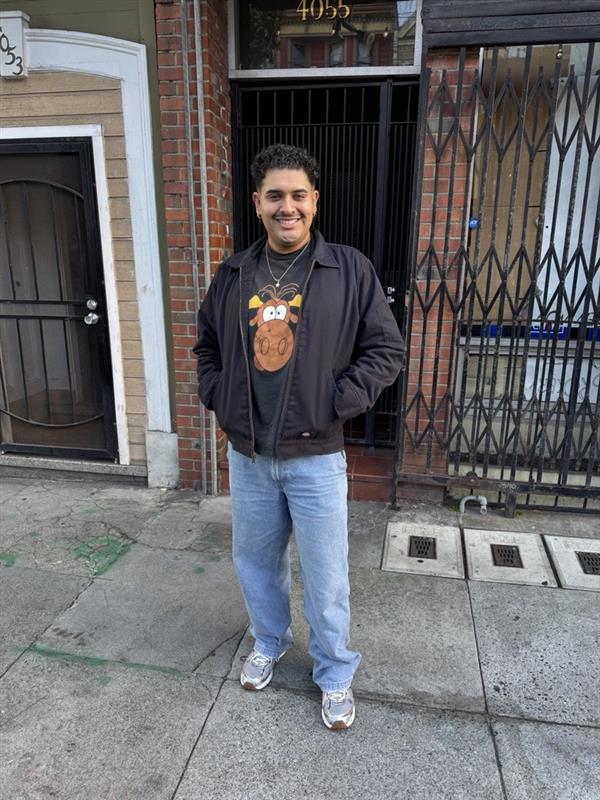
 Martin Zuniga was nominated for the faculty spotlight by Nazi Mohseni, program director for the Dental Assistant program. Martin is uniquely qualified to teach dental assisting; he graduated from the very same program in 2017, worked as a dental assistant in San Mateo County, and then became a Registered Dental Assistant (RDA). After gaining much valuable experience in the field, Martin returned to Carrington College in 2022 as a teacher.
“Martin is giving back to our campus by teaching our students in the classroom now,” Nazi says. “He connects with students, supporting them to become successful dental assistants. He shares his experience working in the dental field, leading them to be great at their jobs. He also encourages students to further their career opportunities by becoming RDAs.”
In this faculty spotlight, Martin shares more about his experience in the field—from student to dental assistant, and then to instructor.
What interested you in dental assisting?
What first interested me in dental assisting was that every day was different. I enjoyed working with people and being part of a team that helped patients improve their oral health and feel more comfortable with their smiles. I also liked that dental assisting combines hands-on clinical skills with patient interaction. I have worked in small, private dental offices, and you really get to work with the same patients; we take our time, and we get to know them.
As I gained experience, I found that building relationships with patients was one of the most rewarding parts of the job. Teaching allows me to pass that experience on to future dental assistants and help them build successful careers.
What is the difference between a dental hygienist and a dental assistant?
Both have important but distinct roles; dental hygienists are focused on preventative care and oral health maintenance, while dental assistants work directly with the doctor.
Dental assistants play an important role in patient care and in helping the dental office run efficiently. They assist the dentist during a variety of procedures by preparing instruments and materials, taking dental radiographs, maintaining infection control, charting treatment, taking impressions, fabricating temporary crowns, and educating patients on oral hygiene.
Students in the Dental Assisting program learn about dental anatomy, dental materials, sterilization, four-handed dentistry, patient communication, and office procedures. Throughout the program, they spend a lot of time practicing these skills in hands-on labs so they can build confidence before entering the workforce.
What did you do after graduating from the Dental Assisting program?
After graduating, I worked in various offices—mostly general, ortho, and pediatric—and then decided to pursue teaching. I’m working at the same place I studied—in the Dental Assisting program at the San Leandro campus of Carrington College.
How did you know you wanted to be a teacher?
Throughout my life, teachers really impacted me in a positive way—so I always wanted to teach. When I was younger, I wanted to be an elementary school teacher.
When I became older, I was interested in becoming a dental hygienist, and then I discovered dental assisting. As I studied and worked within the field, I gained more knowledge and clarity about the career path of a dental assistant and knew I wanted to share that knowledge with the next generation. I was also inspired to become a teacher by one of my dental assisting teachers, Nazi Mohseni, who is now the program director.
Can you share a little more about how your instructor inspired you to teach?
There isn’t one specific moment that stands out; what I do remember is that she was always supportive of her students and genuinely wanted us to succeed. She created a positive learning environment and was always willing to answer questions and help when we needed it. Seeing that made me realize how much of a difference an encouraging instructor can make, and it’s something I try to bring into my own classroom.
What is a typical day like for you as a teacher?
On a typical day, we do a lot of hands-on labs, temporary crowns, and impressions. It gets a little overwhelming, but I offer open labs Monday through Friday (office hours—homework help, or to redo a lab for extra practice or to set up a simulation). I might have one student or the whole class—but typically, it’s about five students at the open labs.
What is your favorite part about teaching in this program?
My favorite part is watching students grow and become proficient in their dental assisting skills throughout the term and program. A lot of students are nervous when they first start because it is such an accelerated program, but over time, watching them grow and hone their skills is very rewarding.
What advice would you give to a student who is just beginning the Dental Assisting program?
The advice I would give to the students beginning the program is not to give up and to take advantage of every opportunity to get extra hands-on experience, like coming to an open lab session. The more practice you get, the more confident and successful you will become.